Description
HUVITAL offers a diverse range of trolleys tailored to meet your specific needs. Please contact us for your request.
In a Central Sterile Services Department (CSSD), trolleys serve as an essential tool for the handling, transportation, and organization of medical instruments, supplies, and equipment throughout the cleaning, disinfection, and sterilization process. They help ensure the smooth workflow of the department and maintain safety and hygiene standards.
Here are the key purposes and roles of trolleys in CSSD:
- Organization and Storage
– Efficient Instrument Handling: Trolleys are used to organize and store instruments before, during, and after cleaning and sterilization processes. They help keep instruments in an orderly manner, reducing the risk of contamination and damage.
– Separation of Clean and Dirty Instruments: Trolleys help separate clean from dirty instruments. For example, one trolley may be used for collecting used, contaminated instruments from the operating room, while another trolley is designated for sterile instruments ready for use.
- Transporting Instruments
– Movement of Instruments: Trolleys provide a convenient means to move medical instruments and supplies from one area of the CSSD to another (e.g., from the cleaning station to the sterilization area or from the sterilizer to storage areas).
– Hygienic Transport: Trolleys are designed to be easily cleaned and sanitized, preventing cross-contamination when transporting instruments. They may have specific compartments or trays to secure instruments during transit.
- 3. Cleaning and Disinfection
– Tool for Disinfection: Trolleys can be equipped with trays or racks for placing instruments during the cleaning process. After ultrasonic cleaning or manual scrubbing, instruments are placed on trolleys for further processing, such as drying or packaging.
– Pre-Sterilization Organization: After cleaning, instruments may be arranged on trolleys for further inspection, drying, or packaging before sterilization in an autoclave.
- Sterilization and Packaging
– Sterilization Preparation: Trolleys can be used to organize instruments before sterilization. For instance, instruments can be arranged in trays or baskets on trolleys to ensure they are properly sterilized, especially if they are being autoclaved.
– Packaging Area: After sterilization, instruments are often placed on trolleys for packaging or labeling. Trolleys with compartments or covers help ensure that sterile instruments remain protected from contamination.
- 5. Supporting Workflow Efficiency
– Streamlining Workflow: By providing a mobile and organized platform for the various stages of the instrument processing cycle (cleaning, sterilization, packaging, storage), trolleys help maintain a smooth workflow within the CSSD, saving time and reducing errors.
– Space Efficiency: Trolleys are designed to be compact and easy to maneuver, helping to maximize space in busy CSSD environments. They can be moved between different workstations without requiring significant physical effort.
- Safety and Compliance
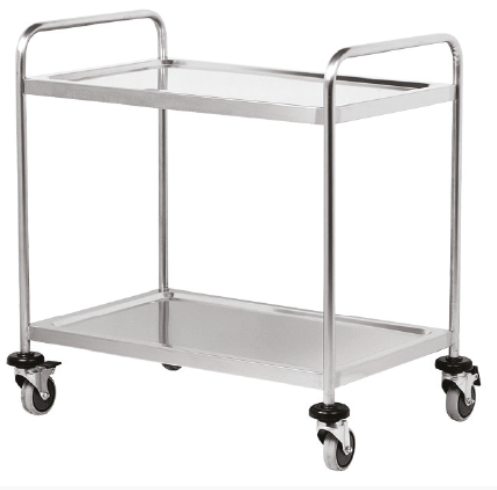
– Ergonomics and Safety: Trolleys are designed to be ergonomically friendly, minimizing physical strain on workers as they move heavy or bulky items. They often have wheels for easy mobility and handles for safe lifting.
– Compliance with Infection Control Protocols: Using trolleys ensures that instruments are not manually handled directly, reducing the risk of contamination and promoting infection control standards.
- Types of Trolleys in CSSD
– Dirty Instrument Trolleys: These trolleys are used to collect used and contaminated instruments from operating theaters or other patient care areas. They are often designed with secure compartments to avoid spreading contamination.
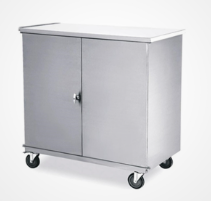
– Clean Instrument Trolleys: These are used to transport cleaned, disinfected, and sterilized instruments to storage or to be used in medical procedures. They are typically equipped with covers or trays to maintain sterility.
– Sterilization Trolleys: These trolleys are specially designed for use during the sterilization process, often used to transport instruments into and out of autoclaves or sterilizing equipment.
Trolleys play a critical role in ensuring the efficiency, safety, and cleanliness of the CSSD by facilitating the smooth movement and organization of instruments and supplies during all stages of processing—cleaning, sterilization, and storage. Their use helps maintain infection control, reduce the risk of cross-contamination, and support the overall functionality of the department.