Description
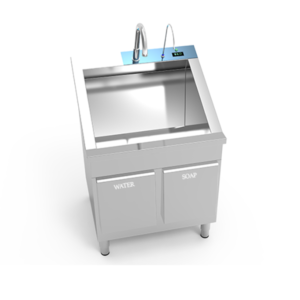
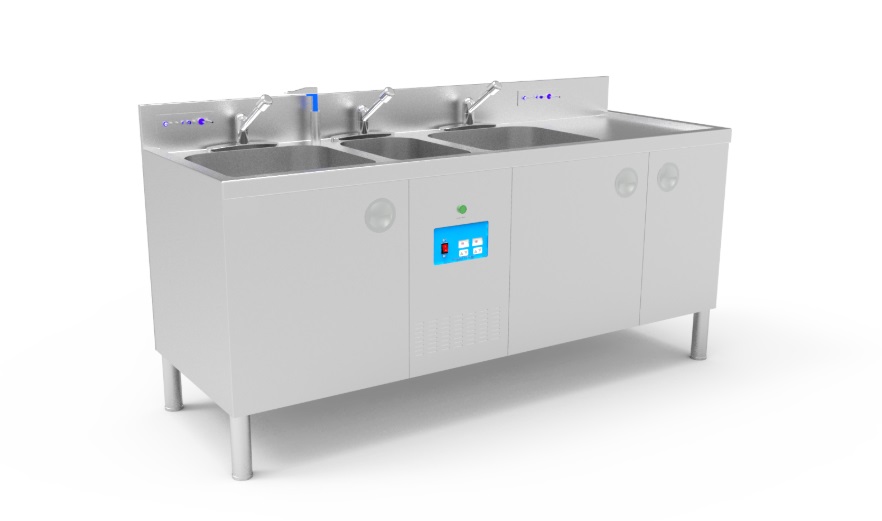
HUVITAL offers a diverse range of ultrasonic cleaners tailored to meet your specific needs. Please contact us for your request.
Ultrasonic cleaners in a Central Sterile Services Department (CSSD) are specialized cleaning equipment used to remove dirt, debris, and contaminants from medical instruments and devices.
These cleaners use high-frequency sound waves (ultrasonic waves) to create microscopic bubbles in a cleaning solution, which then implode, generating intense energy that dislodges contaminants from the surfaces of medical instruments.
Here’s a detailed explanation of ultrasonic cleaners in a CSSD setting:
How Ultrasonic Cleaners Work
- Principle of Operation:
Ultrasonic cleaners operate on the principle of cavitation, where high-frequency sound waves (usually above 20 kHz) create rapid pressure changes in a liquid solution, causing the formation and collapse of tiny bubbles.- Cavitation Effect: The implosion of these bubbles creates small but powerful shockwaves that remove dirt, grease, blood, tissue, and other contaminants from the surfaces of medical instruments.
- Process:
- Instruments are placed into a cleaning tank filled with a special cleaning solution (usually water mixed with detergent or disinfectant).
- The ultrasonic cleaner emits sound waves that cause microscopic bubbles to form and collapse, effectively cleaning the instruments without the need for manual scrubbing.
- This process reaches even the most intricate and hard-to-reach areas of the instruments, such as joints, crevices, and lumens (hollow parts like catheters).
Uses in CSSD
- Pre-Sterilization Cleaning:
Ultrasonic cleaners are primarily used to remove gross contamination (such as blood, tissue, and soil) from instruments before they undergo further sterilization, ensuring that the sterilization process is more effective. - Cleaning Delicate Instruments:
Some medical instruments, particularly those with complex designs, delicate parts, or intricate internal channels, are difficult to clean manually. Ultrasonic cleaning ensures that these delicate instruments are thoroughly cleaned without damage. - Increased Efficiency:
Ultrasonic cleaners significantly reduce manual cleaning time, improve cleaning effectiveness, and ensure the thoroughness of cleaning, particularly for complex or small devices.
Advantages of Ultrasonic Cleaning in CSSD
- Thorough Cleaning:
Ultrasonic cleaning can clean instruments more effectively than manual scrubbing, especially in hard-to-reach areas, like joints or hollow parts. - Prevention of Damage:
Since ultrasonic cleaners do not require direct physical contact with the instruments (like scrubbing), there is less risk of damaging delicate instruments. - Time-Saving:
The cleaning process is automated, so the cleaning of multiple instruments can be done at once, saving time and reducing the workload of CSSD staff. - Reduction in Cross-Contamination:
The ultrasonic cleaner uses a controlled cleaning environment, reducing the chances of cross-contamination that may occur with manual handling. - Consistency and Reliability:
The ultrasonic cleaning process is consistent and reliable, ensuring that each instrument is thoroughly cleaned according to the set parameters, which is important for patient safety.
Key Features of Ultrasonic Cleaners in CSSD
- Adjustable Frequency and Time Settings:
Many ultrasonic cleaners allow the operator to adjust the frequency and duration of the cleaning cycle based on the type of instruments being cleaned and the level of contamination. - Temperature Control:
Some models offer temperature-controlled cleaning solutions to optimize the cleaning process. - Multiple Cleaning Baskets:
To accommodate a variety of instruments, ultrasonic cleaners may have multiple baskets or trays where instruments can be placed without touching each other. - Filtration System:
Many ultrasonic cleaners are equipped with filtration systems to remove contaminants from the cleaning solution, ensuring that it remains effective over multiple cleaning cycles.
Limitations
- Not for Sterilization:
While ultrasonic cleaners are excellent for cleaning, they do not sterilize the instruments. After cleaning with an ultrasonic cleaner, instruments must be sterilized using other methods, such as autoclaving. - Maintenance:
Ultrasonic cleaners require regular maintenance and monitoring, including cleaning the tank, checking for wear on the transducers, and ensuring the solution remains effective.
In summary
, ultrasonic cleaners are essential in CSSDs for cleaning medical instruments effectively and efficiently before sterilization. Their use reduces manual labor, improves cleaning quality, and ensures that instruments are ready for the sterilization process, thereby supporting patient safety in healthcare environments.